The Edit
Best Carry-On Luggage for Men (That Works Every Time)
Check the dimensions for your worst airline, then buy the best construction your budget allows. Most carry-on regret comes from skipping one of those steps.
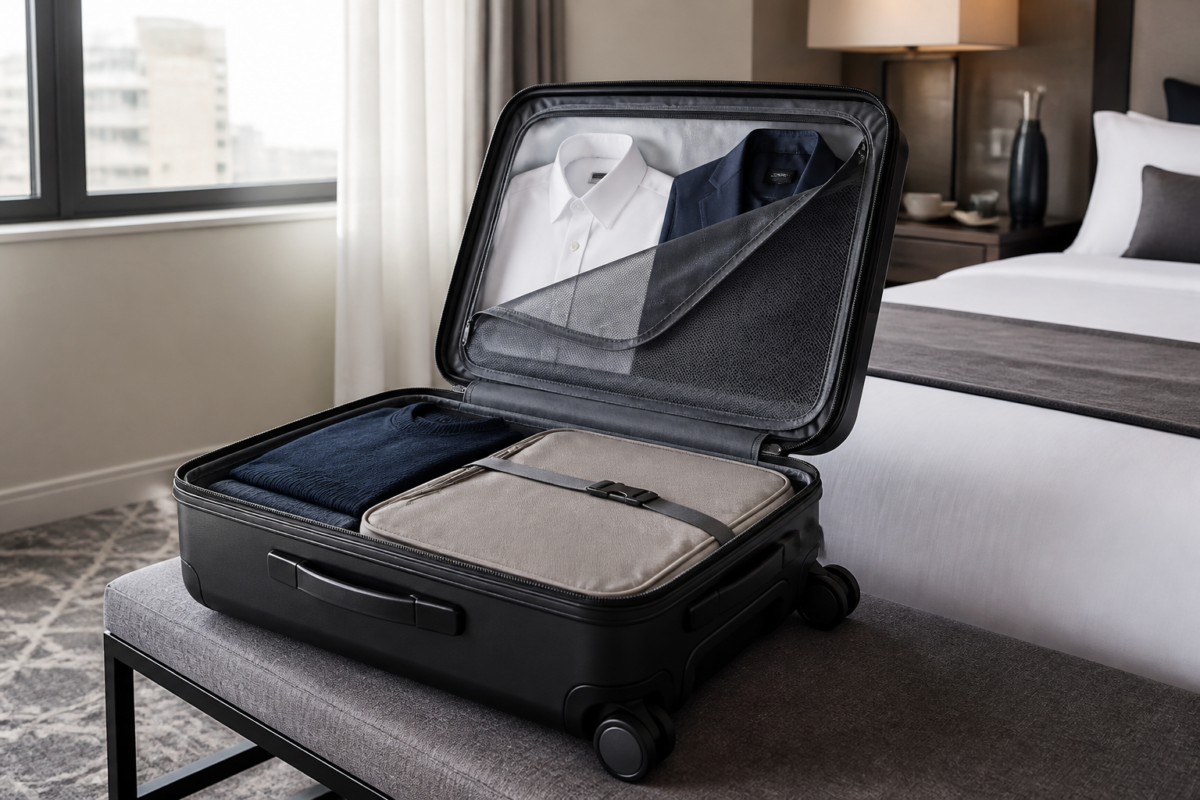
Quick answer: The best carry-on luggage for men is a hard-shell spinner in the 40–55L range, with a TSA-approved combination lock, a compression divider, and dimensions that work on the airlines you actually fly. The standout picks are Rimowa Essential for the premium buy, Horizn Studios H5 for the design-conscious traveller, and Monos Carry-On for the best value-to-quality ratio. Soft-shell cases travel lighter but protect less; hard-shell lasts longer and handles overhead bins better.
This guide covers what to actually check, the brands worth owning, and a decision table by travel pattern.
What to look for in carry-on luggage
Most carry-on buying mistakes come from ignoring the airline dimension check until you’re at the gate. The second most common mistake is buying on aesthetics without checking construction quality. Both are easy to avoid.
What matters most:
- Dimensions first. The most restrictive common standard in Europe is 55×40×20cm (most traditional carriers), with Ryanair at 40×20×25cm (cabin bag). Check *your* most-flown airline before buying anything.
- Spinner wheels vs. two-wheeled. Four-wheel spinners are easier to manoeuvre in terminals; two-wheel rollers handle kerbs and rough surfaces better. Spinners are now the standard for carry-on.
- Hard vs. soft shell. Hard-shell (polycarbonate or aluminium) protects contents better and holds shape in overhead bins. Soft-shell is lighter, more flexible, and fits tighter into irregular overhead spaces.
- TSA-approved lock. Mandatory for US travel; useful to have regardless. Built-in combination locks are standard on quality cases.
- Interior organisation. A compression divider and packing cross-straps are baseline. Separate shoe pockets, laundry pouches, and USB ports are additions — assess based on how he packs.
The one-line rule: Check the dimensions for your worst-case airline, then choose the best construction your budget allows — most carry-on headaches come from skipping one of those two steps.
The best carry-on cases
Premium tier: the cases built to last a decade (£400–£1,000)
- Rimowa Essential Cabin (around £550–£650): The polycarbonate benchmark. Multi-wheel spinner, TSA combination lock, multi-directional wheels on quality bearings. Outstanding durability; the scratch-and-dent on polycarbonate becomes character. A case worth buying once.
- Rimowa Original (Aluminium) Cabin (around £900–£1,000): The design classic. Distinctive ribbed aluminium, superior construction, identifiable from across the terminal. Heavy relative to polycarbonate — trade-off is weight for prestige and durability.
- Tumi 19 Degree Aluminium (around £900–£1,100): Tumi’s premium hard-shell. Clean lines, outstanding organisation, quality guarantee. Competes directly with Rimowa Original at similar price points.
- Briggs & Riley Baseline (around £450–£550): Soft-shell but outstanding build quality and an unconditional lifetime guarantee. The case he buys if he checks bags and wants durability over aesthetics.
Mid-premium tier: the best value proposition (£150–£400)
- Horizn Studios H5 (around £320–£380): Berlin-designed, clean minimal aesthetic, polycarbonate construction, USB charging port, phone holder inside lid. The carry-on for the design-conscious traveller who doesn’t want to pay Rimowa prices.
- Monos Carry-On (around £180–£220): Outstanding quality-to-price ratio. Japanese 100% polycarbonate shell, TSA lock, well-organised interior, clean neutral colour options. The standout recommendation under £250.
- Away The Carry-On (around £225–£275): The brand that revived the premium carry-on market. Polycarbonate shell, compression system, built-in battery (check airline rules). Interior organisation is particularly good.
- Samsonite Lite-Box (around £150–£200): Very light for a hard-shell — the choice for the weight-conscious traveller. Less premium aesthetics than Monos or Horizn, but Samsonite’s quality control is reliable.
The budget baseline (under £150)
- American Tourister Bon Air (around £60–£100): The entry-level TSA-lock hard-shell. Not premium, not built to last a decade, but competent for infrequent travellers who don’t want to invest in premium luggage yet.
Key specs at a glance
| Case | Shell | Capacity | Weight | Price |
|---|---|---|---|---|
| Rimowa Essential Cabin | Polycarbonate | 38L | 3.5kg | £550–£650 |
| Rimowa Original Cabin | Aluminium | 35L | 4.1kg | £900–£1,000 |
| Horizn Studios H5 | Polycarbonate | 38L | 3.8kg | £320–£380 |
| Monos Carry-On | Polycarbonate | 38L | 3.2kg | £180–£220 |
| Away The Carry-On | Polycarbonate | 39L | 3.6kg | £225–£275 |
| Briggs & Riley Baseline | Soft shell | 40L | 3.1kg | £450–£550 |
Best pick by traveller type
| He is… | Best carry-on |
|---|---|
| A very frequent flyer, wants to buy once | Rimowa Essential Cabin |
| Design-conscious, doesn’t want Rimowa | Horizn Studios H5 |
| Best value, hates compromising on quality | Monos Carry-On |
| Travels with checked bags, wants durability | Briggs & Riley Baseline (soft shell + lifetime guarantee) |
| Wants the aluminium classic | Rimowa Original Cabin |
| Budget-conscious but needs a hard-shell | Samsonite Lite-Box |
How to choose in under a minute
1. What airlines does he fly most? Check their cabin bag dimensions before shortlisting anything. 2. How often does he travel? Weekly: Rimowa or Briggs & Riley. Monthly: Monos or Away. Occasionally: Samsonite does the job. 3. Hard or soft? Hard for business travel and protection. Soft for lighter weight and overseas checked bags. 4. What’s the budget? Under £250: Monos. £250–£400: Horizn Studios. Over £400: Rimowa Essential. No budget limit: Rimowa Original or Tumi.
Frequently asked questions
What is the best carry-on luggage for men? The Rimowa Essential Cabin for the buyer who wants to invest once in a case that lasts a decade. The Monos Carry-On for the best value-to-quality ratio under £250. Both are polycarbonate hard-shells, carry-on compliant on most carriers, and well-organised inside.
What size carry-on should I buy? Most quality carry-on cases fall in the 35–42L range, which fits a three-night trip when packed carefully. The more important dimension is the external measurement — check your most-flown airline’s cabin bag limit before choosing a size.
Is Rimowa worth the money? For frequent travellers, yes. Rimowa’s polycarbonate cases are built to handle weekly use, the wheels and handles hold up significantly better than mid-range alternatives, and Rimowa honours its guarantee. For occasional travellers, Monos or Away offer most of the benefit at half the price.
What’s the difference between Rimowa Essential and Original? Material: the Essential is polycarbonate (lighter, slightly flexible), the Original is aluminium (heavier, rigid, scratch-showing). The Original is heavier and more expensive but has the classic ribbed aesthetic. Most frequent travellers prefer the Essential’s weight advantage.
Are hard-shell or soft-shell carry-ons better? Hard-shell is better for business travel: it holds shape in overhead bins, protects contents from overhead pressure, and looks cleaner. Soft-shell is lighter and can fit into tighter overhead spaces. The Briggs & Riley Baseline is the exception — a soft-shell with outstanding construction.
What carry-on luggage do business travellers prefer? Rimowa is the de facto premium choice at airports worldwide. Away and Monos are increasingly common among design-aware travellers. Tumi is strong in the business premium segment. Most frequent business travellers prioritise durability, organisation, and a neutral, professional aesthetic over novelty features.
The bottom line
Carry-on luggage is one of those purchases where the gap between a good case and a great one becomes obvious after the first three trips. The right choice depends on how often he flies, which airlines he uses, and how much he values aesthetics versus pure durability. Most men who invest in a Rimowa, a Monos, or a Briggs & Riley stop thinking about their luggage — which is exactly what good luggage should do.
Continue reading
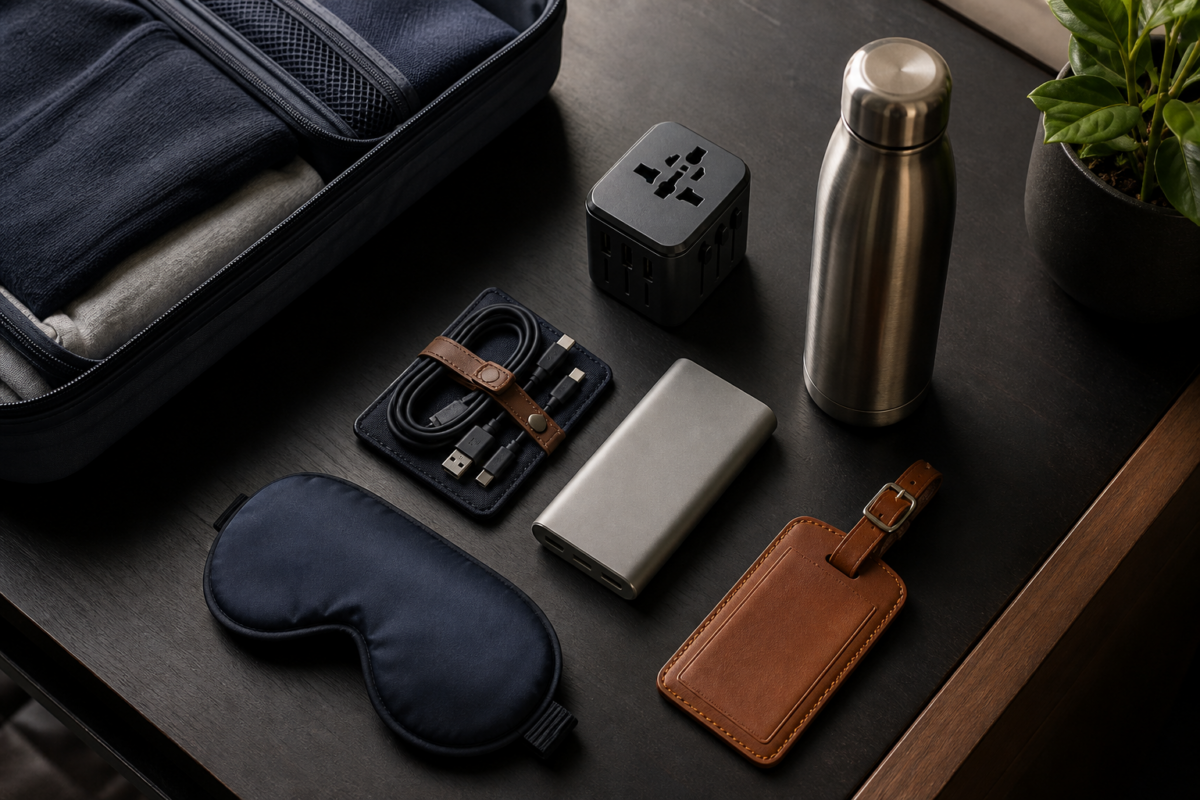
Best Travel Accessories Worth Buying (And the Ones to Skip)
The accessories worth owning solve a problem he has on every trip. Everything else is clutter with good marketing.
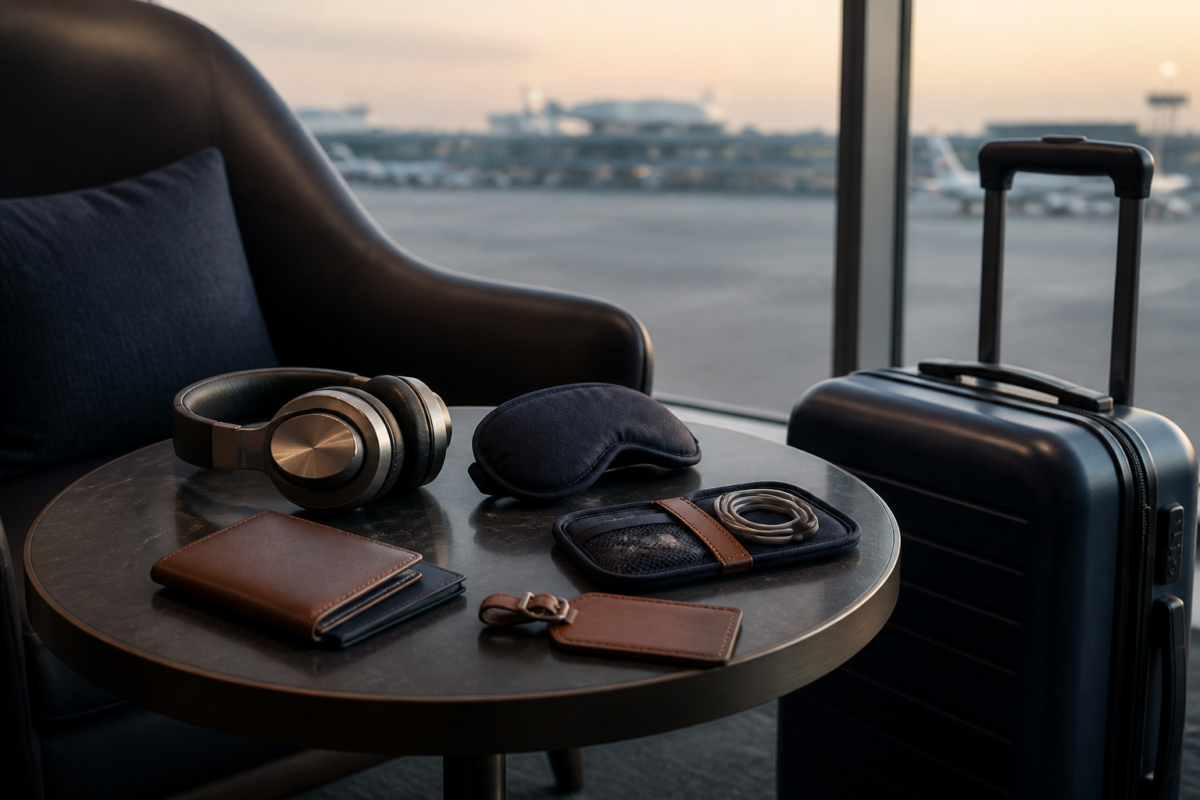
Best Gifts for Men Who Travel Frequently
He has sourced his own adapters and knows his liquids limit. The gift that lands is the better version of what he packs every single trip.
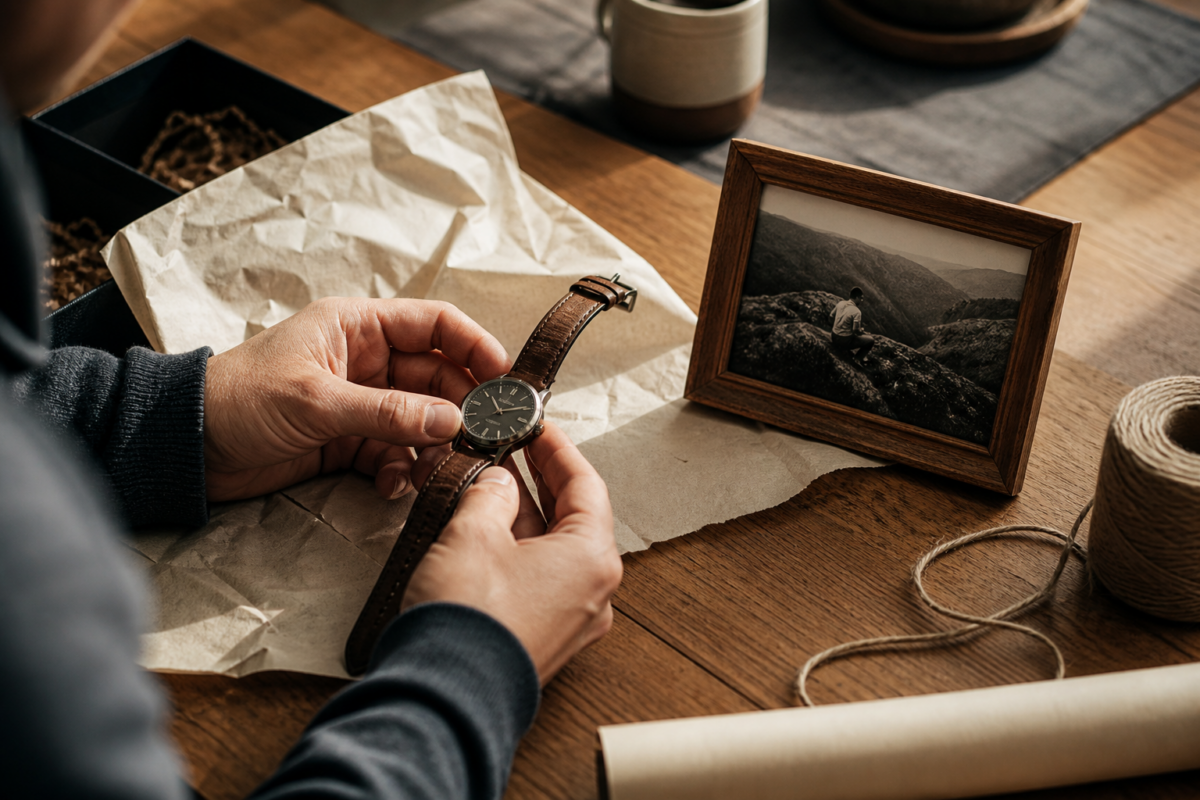
Best Thoughtful Gifts for Men (That Actually Show You Were Paying Attention)
Thoughtful is not a price bracket. It is proof you were listening — and it is usually cheaper than the alternative.